Perimeter channel systems that capture and redirect water at the point of entry, protecting your basement without exterior excavation or landscape disruption.
Effective, proven, and installed without disturbing your yard or exterior features.
Interior systems are installed entirely from inside the basement, eliminating the landscaping and hardscaping disruption that exterior work requires.
Rather than waiting for water to accumulate, channel systems intercept it at the point of entry for immediate collection and removal.
Regardless of outdoor temperature or ground conditions, interior drainage installation moves forward on schedule.
Gravity-fed channel designs minimize pump cycling frequency, extending pump service life and reducing electricity usage.
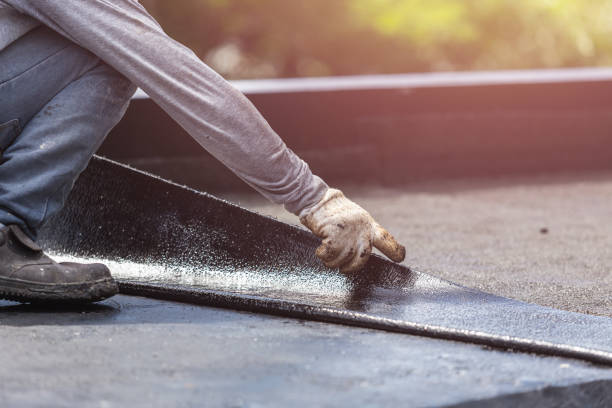
Interior drainage systems in Townsend are installed by saw-cutting a trench around the interior perimeter of the basement floor slab, typically four to six inches wide and deep enough to reach the footing level or just below the slab. This trench is the channel that collects water entering at the floor-wall joint and routes it by gravity toward the sump pit. The saw-cutting process is performed with diamond-blade equipment that produces a straight, controlled cut without excessive vibration damage to the surrounding slab. Dust is a natural byproduct of this process, and our crews use containment and ventilation practices to minimize spread to finished areas of the home.
Perforated channel systems offer specific advantages over simple gravel-and-pipe installations in Townsend basements with block or stone foundations. The channel profile is engineered to sit at the footing level where hydrostatic pressure concentrates, and the wall flange extension captures seepage that occurs at the bottom course of block rather than strictly at the floor-wall joint. This distinction matters because without the wall flange, water running down the interior wall face bypasses the channel and spreads across the floor before reaching the collection point. Proper channel specification requires understanding where the moisture entry is actually occurring, which the assessment process documents before any installation begins.
Sump pit sizing for an interior drainage system in Townsend requires calculating the expected inflow volume per pump cycle to determine the minimum useful pit capacity. A pit that is too small forces rapid pump cycling, which increases motor wear and reduces system reliability. Our pit specifications for Townsend installations account for the channel length feeding the pit, the soil permeability documented during the assessment, and the seasonal inflow patterns typical for your area of Townsend, TN. These calculations are not guesswork; they are based on the same hydraulic principles used in commercial drainage design, applied to residential scale.
One of the most important honest assessments we provide in Townsend is explaining what interior drainage does not do. Interior systems do not treat the foundation wall itself, do not reduce hydrostatic pressure against the exterior wall surface, and do not address wall seepage that is occurring mid-wall due to horizontal cracks or structural movement. For those conditions, exterior membrane work or crack injection is the appropriate treatment. Interior drainage excels at managing water entry at the footing level, floor-wall joint seepage, and floor-level pressure seepage in situations where the foundation is structurally sound but the original waterproofing has aged or the perimeter soil conditions create chronic seepage during saturation events. We document which conditions are present in your specific Townsend basement and recommend the approach that addresses your actual moisture source, not a generic solution that covers all scenarios on paper but misses your specific entry points.
Every service performed to drainage system standards and local code requirements.
Our full perimeter systems capture seepage from every wall section, routing it to the sump pit regardless of which foundation wall is experiencing the greatest inflow at any given time.
Learn moreFor Townsend homes where moisture entry is concentrated on one or two walls, targeted channel installation along the affected sections provides effective protection at lower cost than full perimeter treatment.
Get an assessmentThe wall flange component extends the drainage channel up behind the base of the wall to capture moisture migrating down the wall face before it reaches the floor.
Ask about wall flangesPit location decisions consider channel slope, discharge routing, basement layout, and finished area constraints. We document the reasoning for every pit placement recommendation.
Plan your pit locationExisting interior drainage channels can become clogged with sediment, mineral deposits, or root intrusion over time. We inspect, flush, and repair existing systems in Townsend homes to restore full drainage performance.
Schedule an inspectionWhen a previously installed partial channel system needs to be extended to address additional wall sections, we design and install the expansion with clean transitions to the existing channel and updated sump pit capacity if required.
Expand your systemA methodical process that produces a drainage system built to perform for decades.
The assessment produces a written condition report that forms the basis for every specification decision in the installation plan. No work is designed without this foundation.
Diamond-blade equipment cuts the perimeter trench to specified width and depth. Cuts follow a planned route documented in the installation drawing, ending at the designated sump pit location. Dust containment is deployed to protect finished areas of the home during cutting.
Each connection point between channel sections is inspected before the next section is placed to confirm continuity and proper slope transition.
New concrete is poured over the channel system, restoring the floor surface and permanently enclosing the drainage installation. After cure, the full system is tested by introducing water at multiple points along the channel and verifying flow to the sump pit and pump activation.
Real words from real customers, after their first season with an interior drainage system installed.
The assessment was thorough and they explained exactly which wall sections were causing the problem. The installation took one day and the crew cleaned up completely before leaving. The following spring, which was wet, produced zero water on the basement floor for the first time in seven years.
Our older block foundation was not a candidate for exterior work without major landscaping disruption. The interior channel system gave us the protection we needed without touching the exterior at all. The wall flange detail they added captured the seepage that was running down the bottom block course, which was the main issue.
We had the system installed in November, which would have been impossible with exterior work given the ground conditions that time of year. The interior installation was unaffected by weather and completed in a single day. The system handled a major rain event the following week perfectly.
Clear, direct answers from a drainage technician perspective, not a sales script.
The installation begins with saw-cutting the basement floor slab along the planned channel route, typically four to six inches from the foundation wall. The cut follows the interior perimeter of the basement and terminates at the sump pit location. Concrete is removed and the subbase is excavated to reach the footing level, then a gravel bed is placed, the drainage channel profile is set to slope toward the pit, and the wall flange is installed where specified. New concrete is poured to cap the system and restore the floor surface. Most residential installations in Townsend are completed in a single working day for standard perimeter configurations.
Interior drainage is a long-term system, not a temporary repair, when it is properly installed and the channel is correctly sized for the inflow volume. The channel system itself has no moving parts and requires no maintenance beyond occasional inspection. The gravel bed does not compact or break down under normal conditions. The drainage profile materials used in quality installations are rated for permanent soil-contact use. Systems installed decades ago continue to perform when the sump pump is maintained and the channel has not been blocked by slab settlement or debris infiltration.
Interior drainage typically costs less per linear foot than exterior excavation and membrane waterproofing, primarily because the excavation equipment, soil management, and backfill work associated with exterior projects add significant cost to that scope. For most standard residential configurations in Townsend, interior drainage is a more budget-accessible solution. However, cost comparison alone should not drive the decision; the correct approach depends on the moisture entry mechanism present in your specific basement. Installing interior drainage to address a problem that is fundamentally an exterior membrane failure will provide comfort improvement but will not stop ongoing wall contact moisture, which continues to deteriorate the wall material.
Standard full perimeter interior drainage installation for a typical single-story Townsend basement is completed in one working day. Partial perimeter systems on one or two walls are typically finished in half a day. Basements with complex layouts, finished areas requiring careful routing, or multiple existing pipe penetrations crossing the channel path may extend the installation to a second day. We provide an accurate time estimate after the assessment so homeowners can plan for the dust and noise associated with saw-cutting, which is the most disruptive phase of the installation.
An interior drainage channel system requires minimal maintenance because it has no moving parts. The primary maintenance task is ensuring the sump pump connected to the system is in good working order, which involves the same inspection protocol as any pump: float switch testing, motor operation check, discharge line inspection, and battery backup readiness verification. The channel itself should be visually inspected at accessible cleanout points annually if the design includes them, or whenever pump performance changes in a way that might indicate a channel blockage. Older channel installations in some Townsend homes show calcium and mineral deposit buildup over many years, which can be addressed with periodic flushing.
Interior drainage can be installed in a finished basement, though the process requires more planning and may involve temporary disruption of finished flooring and baseboard materials along the channel route. The saw-cutting must follow the perimeter regardless of what is installed above it, so finished flooring within the cut zone will need to be removed before work begins and replaced after the concrete cap cures. Drywall along the base of finished walls is typically removed at least partially to allow the wall flange to be installed properly. We document all disruption areas in the installation plan so homeowners can arrange for finish materials before scheduling the work.
No excavation. No landscape disruption. Just a properly installed channel system that manages water at the point of entry, year after year.
Call +1-866-476-1348 for Assessment